

Advanced dual-functional surface coatings for microbial resistance and enhanced biocidal action

The Precursor Ceramic Group of the Chair of Ceramic Materials Engineering (CME), together with the Chair of Process Biotechnology (BPT), has successfully acquired a new research project funded by the German Research Foundation (DFG).
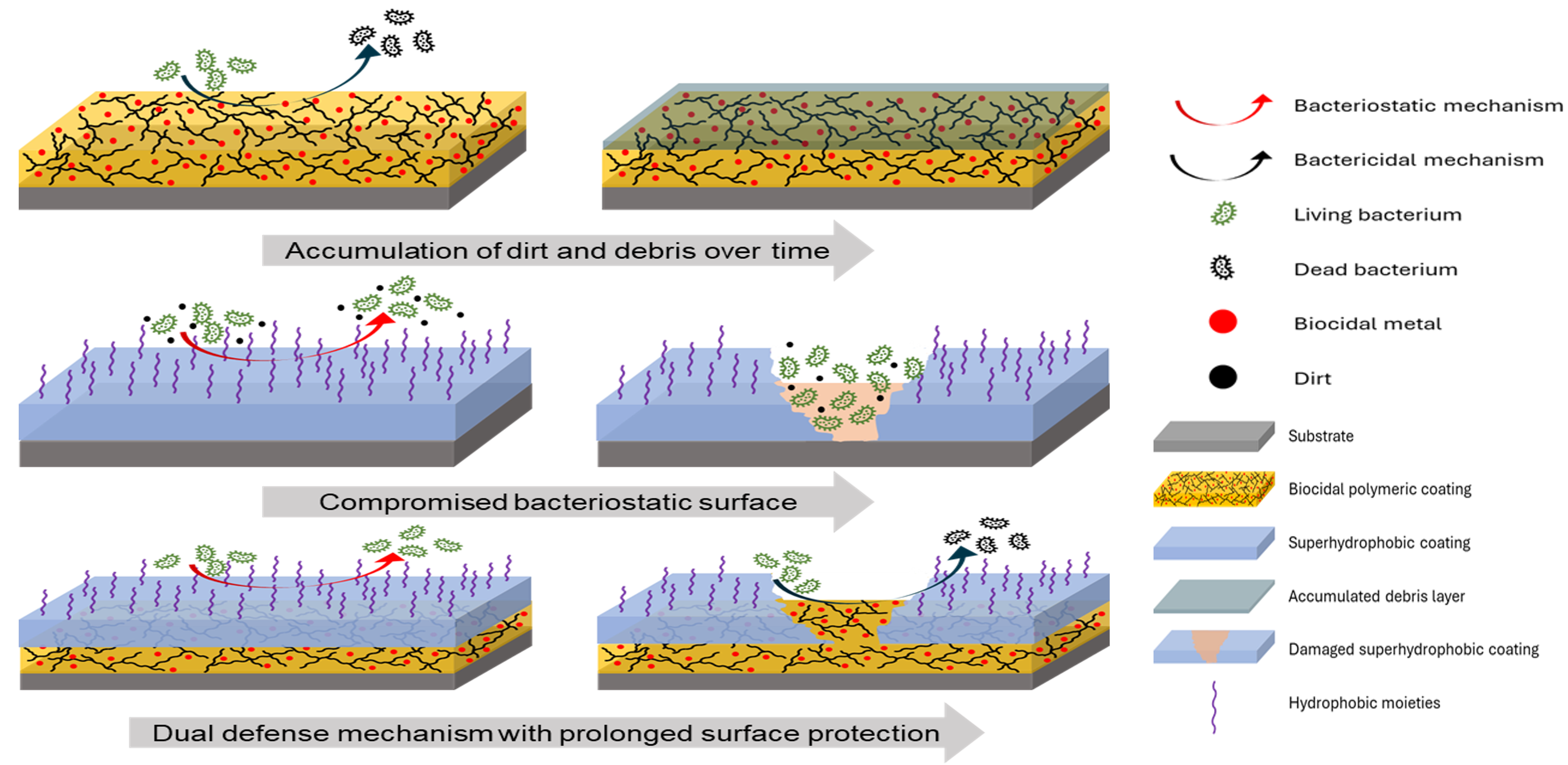
The project focuses on the development of innovative multifunctional coating systems based on polysilazanes and organometallic compounds for reducing microbial load on surfaces exposed to demanding hygienic environments such as hospitals and long-term care facilities. The proposed concept combines two complementary protective mechanisms within a bilayer architecture as depicted in the scheme below. A dense superhydrophobic top layer that suppresses the adhesion of proteins, microorganisms, and biofilms, and an underlying biocidal layer containing antibacterial metal ions such as zinc or copper. In the event of mechanical wear or local damage to the outer layer, the lower biocidal layer is intended to maintain antimicrobial activity, thereby extending the overall service life of the coating system. A key aspect of the project is the use of advanced polysilazane-derived hybrid materials. Due to their excellent film-forming behavior, strong adhesion to diverse substrates, and high chemical and thermal stability alongside mechanical integrity, polysilazanes are particularly attractive candidates for durable protective coatings. Their versatile chemical functionality additionally enables targeted modification and incorporation of metal-containing compounds, allowing the development of robust hybrid systems with tunable mechanical, surface, and antibacterial properties.
Alongside materials synthesis and characterization, this project also includes comprehensive biological investigations on antibacterial performance, fouling resistance, microbial adhesion, and the mode of action of several commonly implemented biocidal metal ions such as Zn2+, Cu2+, and Ga3+. Particular emphasis will be placed on understanding how the combination of anti-adhesive surface properties and controlled metal ion release influences bacterial colonization, biofilm formation, long-term resistance development, and gene expression. Complementary biocompatibility studies with mammalian cells will further assess the suitability of the coating systems for potential applications in medically sensitive environments. The long-term goal of the project is the development of durable, fluorine-free, and environmentally benign antimicrobial coating systems for technical and medical applications requiring long-term hygienic surface protection.
Duration: 3 years
Sponsor: German Research Foundation
Project partner: Chair of Process Biotechnology
Contact: Prof. Dr. Günter Motz